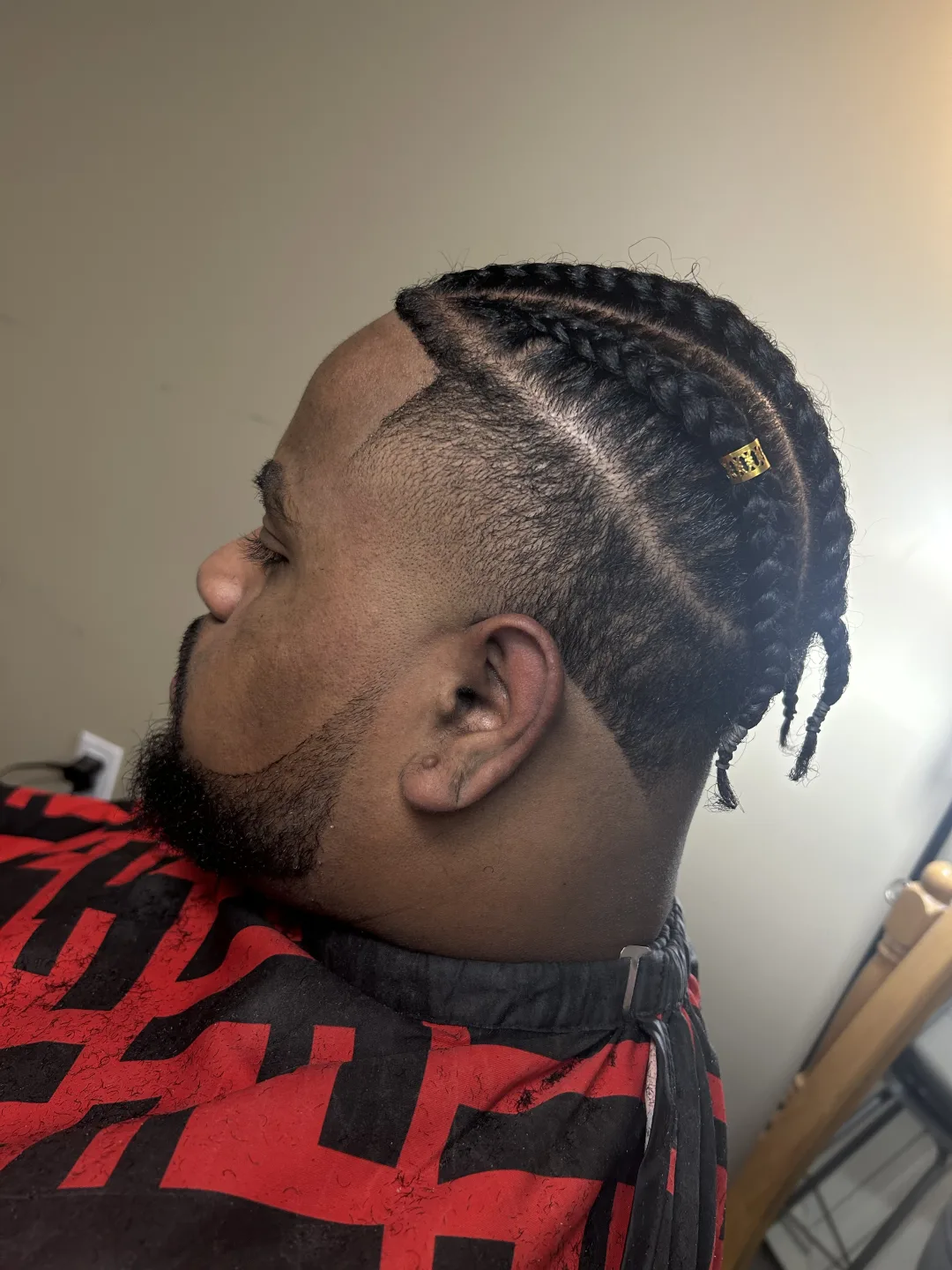
Cornrows over a fade is one of the cleanest combinations in the game. Sharp pattern up top, skin-tight sides, a lineup that frames the whole thing. When it's fresh, it turns heads. The catch: you're maintaining two things at once — the braids and the fade — and they age on completely different schedules.
This guide breaks down how to keep both sharp between appointments: wash routine, night protection, cleanup timing, and exactly what to say when you sit in the chair.
Why do cornrows and fades work so well together?
Contrast. That's the whole play. Cornrows bring structure and pattern to the top. A fade strips the sides down to skin. Put them together and every line gets louder — the braid pattern reads cleaner, the fade looks tighter, and the lineup ties it all off like a frame around a canvas.
It's also practical. Braided hair grows out quietly. Faded hair does not. Keeping the sides shaved down means the style stays intentional for weeks instead of days. And because the top is braided away from the hairline, your barber has a clear runway to work the skin fade and the edges without going anywhere near your braider's work.
How often should the fade be cleaned up around cornrows?
Here's the mismatch nobody warns you about: a good set of cornrows lasts four to eight weeks. A skin fade looks its best for about one to two. If you only touch the fade when you redo the braids, you'll spend most of that stretch with fuzzy sides under a clean pattern — and it shows.
The fix is simple. Book fade cleanups between braid appointments. The barber fades around the existing braids, refreshes the lineup, and you walk out looking day-one fresh without touching the set. Most guys land on a cleanup every ten to fourteen days. If you like the fade skin-tight, lean closer to weekly. There's a full breakdown of timing in our fade maintenance guide.
What's the night routine for cornrows?
Night is where cornrows live or die. Cotton pillowcases pull moisture out of your hair and rough up the braids while you sleep — that's where the frizz halo comes from.
- Wrap it. A silk or satin durag or scarf every night. No exceptions. It keeps the pattern smooth, the frizz down, and the moisture in.
- Satin pillowcase as backup. For the nights the durag slides off, the pillow shouldn't be working against you.
- Hands off. Constant touching and scratching lifts hair out of the braid. If your scalp itches, treat the scalp — don't dig at the rows.
Ten seconds of wrapping buys you extra weeks on the set. Cheapest maintenance you'll ever do.
Already sold? Skip ahead and book the chair →
How do you wash and moisturize cornrows over a fade?
You still wash. Skipping wash day doesn't preserve braids — it builds up oil, product, and lint that ages the whole style faster. Aim for every one to two weeks:
- Dilute shampoo with water in a squeeze bottle and apply it straight to the scalp between the rows.
- Massage with fingertip pads, not nails. Rinse thoroughly, with the water flowing in the direction of the braids.
- Squeeze — never rub — with a microfibre towel, then let the braids dry fully. Damp braids wrapped up overnight can turn musty.
- Finish with a light oil on the scalp and a small amount of moisturizer smoothed along the rows.
The faded sides need nothing special — regular washing keeps the skin clean and calm, which makes every cleanup smoother.
What should you tell the barber at your cleanup?
Keep it simple and specific. Say you're keeping the braids in and you want the fade and edges refreshed around them. From there, cover three things: how high the fade should sit, how tight you want the bottom, and whether the lineup should stay natural or crisp. If it's your first visit with braids in, mention it — the braids get pinned or tied up, and the perimeter gets worked carefully so the set stays exactly as your braider left it.
One thing to be clear about: the chair handles the fade and the lineup, and your braider handles the braiding. Keep both appointments on a rhythm and the whole look stays sharp with zero dead weeks. Due for one? Book the chair.
When is it time to take the cornrows out?
Every set has an expiry date. Push past it and you trade style points for breakage. The signs it's time:
- The roots have grown out enough that the braids are lifting and sliding off the scalp.
- Frizz has gone from a light halo to full static.
- Buildup you can see — white residue, lint caught in the rows.
- Itching that no scalp oil calms down.
For most guys riding out a dry Guelph winter, that's the four-to-six-week mark; summer sets can stretch a little longer. Take-down day is the perfect day to book a full reset — a fresh fade on loose hair, a proper shape-up, and a clean slate for the next set.