Braids on top, skin on the sides, a lineup you could set a ruler against. It's a look with real presence — but it takes two sets of hands: a braider for the top and a barber for everything below it. Getting the combination right is mostly about booking it right.
Here's how the whole thing works before you sit in either chair: what order to book, how the barber fades around your braids without disturbing them, and how to keep it sharp once you've got it.
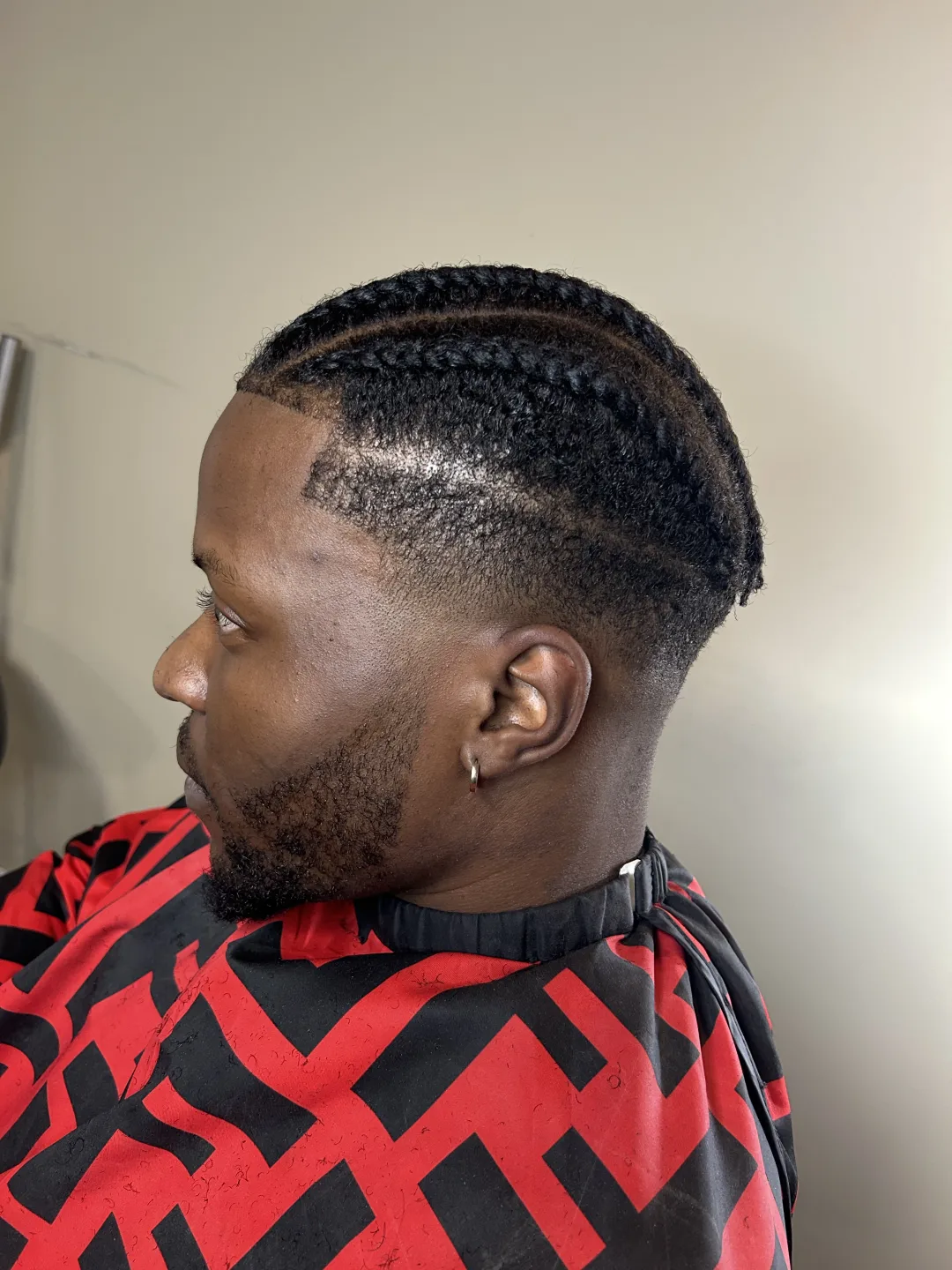
Can you get a skin fade with braids in?
Yes — and this trips people up, so let's be clear. You do not need to take your braids out for a fade. The braids get pinned or tied up out of the way, the barber takes the sides and back down to skin around them, and the hairline gets finished clean. Your braider's work stays exactly as it was installed.
One boundary worth knowing: the barbershop side of this equation is the fade and the lineup. The braiding itself — the parting, the pattern, the install — is your braider's craft. The chair at Studio K in Guelph handles the rest: skin-tight sides and edges cut with intent. Division of labour, both done properly.
Which comes first — the braids or the fade?
Both orders work. What actually matters is the gap between the two appointments.
- Braids first, fade after. The most popular play. Get braided, then hit the barber a day or two later. The fade and lineup get cut around the finished pattern, so everything is framed against the final look. Sharpest possible result.
- Fade first, braids after. Also solid — your braider gets clean edges to part against. Just remember the fade starts aging from day one, so don't leave a two-week gap before the install.
Whichever way you go, keep the appointments close together. A fresh fade under tired braids — or fresh braids over a grown-out fade — leaves half the look flat, and everyone can tell which half.
How does the barber fade around braids?
Carefully, and with a plan. The braids get secured up and away from the sides. The fade gets built from the bottom up — skin at the perimeter, blended through the transition zone below where the braids begin. The real detail work happens at the border: cleaning the margin under the braid pattern so the fade meets the braids at a defined edge instead of a fuzzy no-man's-land.
Then the lineup. Front hairline, temples, behind the ears, the neckline — crisp lines that frame both the fade and the pattern above it. If you've never had one, our explainer on the lineup covers why it's the detail that makes the whole style read as finished.
Already sold? Skip ahead and book the chair →
Where should the fade sit with braids?
Height changes the entire attitude of the look.
- High skin fade: maximum skin, maximum contrast. The braid pattern pops hardest — but grow-out shows fastest, so it's the highest-maintenance pick.
- Mid fade: the balanced choice. Plenty of contrast, slightly more forgiving between cleanups.
- Low fade or taper: subtle and office-friendly. More of the sides stay covered, which suits longer braid styles and slower cleanup schedules.
Factor in your braid pattern too. Straight-back cornrows suit almost any height, while more intricate designs often deserve a mid or high fade so the work gets room to breathe. Undecided? Start mid — you can always go tighter next visit. Our skin fade page covers what to expect in the chair.
How often does the fade need a cleanup?
Every one to two weeks if you want it looking fresh. Skin fades show regrowth fast, and the contrast with braids makes any fuzz twice as visible. Your braids, meanwhile, are good for four to eight weeks. So the rhythm looks like this: one braid install, two or three fade cleanups underneath it, then a full reset when the set comes out.
Cleanups are quick — braids up, sides taken back down, lineup re-sharpened. If you've got something on the calendar — event, photos, first day somewhere — book the cleanup for the day before. For the deeper routine on washing, wrapping, and keeping the whole set healthy, read the cornrows and fades care guide.
How do you book it right?
Three moves:
- Lock your braider first. Braider availability is usually the tighter bottleneck. Get the install date, then book the fade for a day or two after.
- Mention the braids when you book the chair. Fading around an existing set is a different job than a full cut, and knowing the plan means the right time gets set aside for the detail work.
- Know your fade height going in. Or at least bring a reference photo. Two minutes of clear consult beats ten minutes of guessing every time.
That's the whole system. Your braider handles the top, the chair handles everything below it. Once your install date is locked, book the chair — and keep both halves of the look on schedule.