Mid fade or high fade — it's one of the most common crossroads in the chair, and the choice changes how the entire cut reads. Same technique, same blend, different altitude. Completely different energy.
Neither one is better. One of them is better for you — for your head shape, your job, your patience for upkeep. Here's how to call it before you sit down.
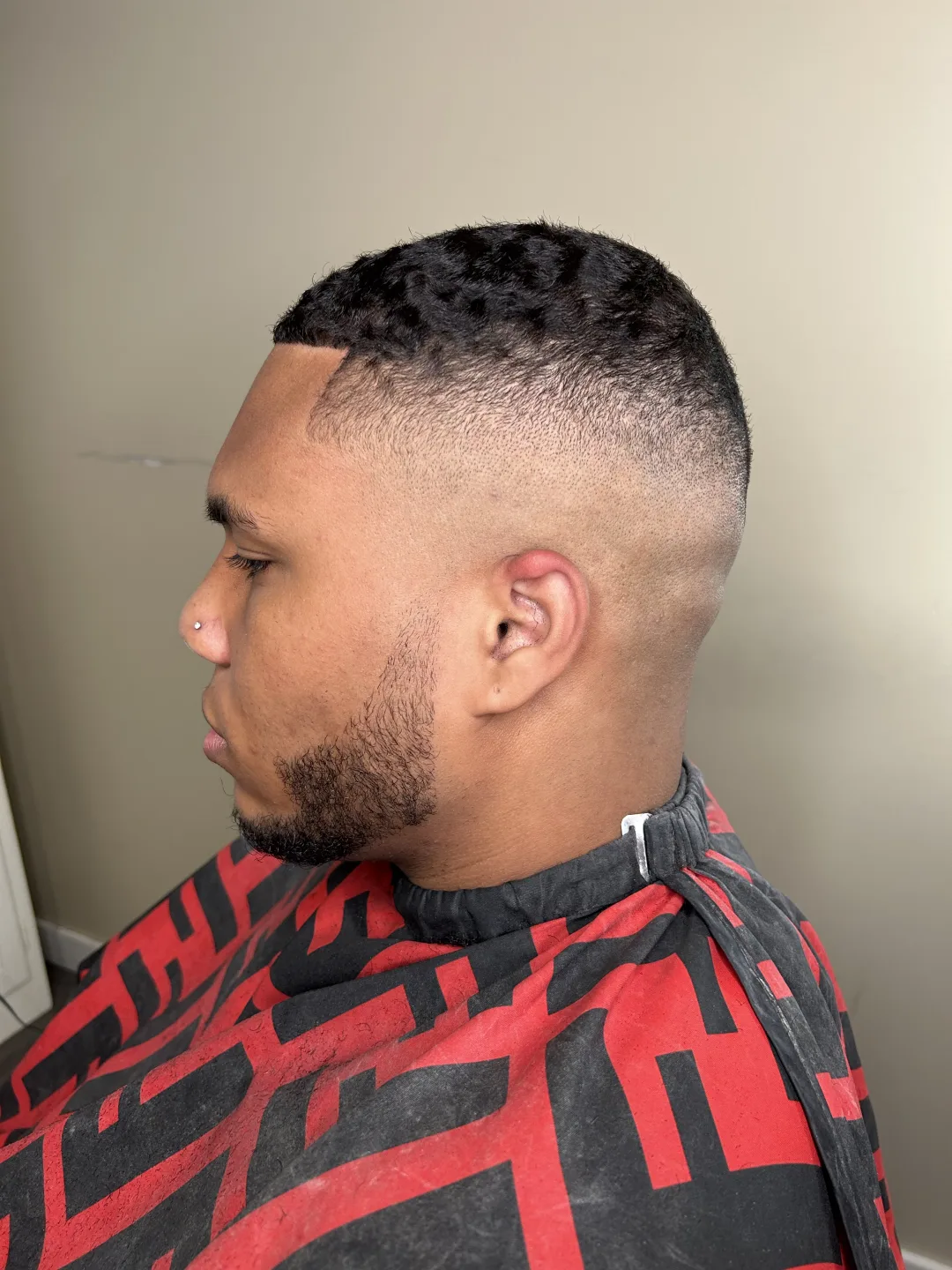
Where does each fade actually sit?
Picture the side of your head split into thirds between the ear and the crown. A mid fade peaks in the middle band, around the temples — high enough to show real contrast, low enough to keep the sides looking full from the front. A high fade climbs to the top band, up near where the head starts to curve, leaving a strong horseshoe of length on top and skin-tight sides almost all the way up.
The altitude changes the visual weight. A mid fade keeps some frame around your head; a high fade strips it away, pushing every bit of attention to the top and your face. That's the whole decision in one sentence: how much frame do you want to keep?
Who does a mid fade suit?
Almost everyone — that's its superpower. The mid fade is the all-rounder: sharp enough to look deliberate, conservative enough for any office in Guelph, and flexible enough to sit under nearly any top. Crops, quiffs, curls, brush-backs, waves — the mid fade carries them all without complaint.
It flatters most head shapes because it keeps a band of hair right where most heads want a little visual width. It's also the forgiving choice: regrowth blends in more gently, so a missed week doesn't announce itself to the whole room.
If you're getting your first fade, coming back after growing your hair out, or you simply don't want to overthink this — mid is the answer. You can always push higher next time.
Who does a high fade suit?
The high fade is for people who want the cut to say something. Maximum skin, maximum contrast, zero ambiguity. It reads bold from every angle, and it makes short tops look sculpted — a dense crop, tight curls, or a clean pompadour over a high fade looks engineered rather than styled.
It particularly rewards strong features — defined jawline, solid hairline, confident bone structure — because there's no hair left to soften the frame. It also adds visual height, which is why rounder faces often love it.
The trade is commitment. All that exposed skin shows regrowth fast, and a high fade in week four looks unfinished rather than grown out. If you go high, plan on seeing the chair roughly every two weeks.
Already sold? Skip ahead and book the chair →
Does face shape change the answer?
It should at least influence it. Rounder faces gain from the height and stripped sides of a high fade — the cut stretches the silhouette vertically. Longer, narrower faces usually sit better under a mid fade, which keeps side volume and stops the face from reading even longer. Square and oval faces win either way; oval especially can wear almost anything.
None of this is law. Hairline, growth pattern, and beard all move the needle too — a strong beard, for instance, can anchor a high fade on a longer face. For the full breakdown, read our guide to the best haircut for your face shape, then let the consult confirm it.
Which one is easier to maintain?
Mid, and it's not close. The lower peak means less exposed skin, so stubble regrowth blurs the blend more slowly and the cut holds its shape well into week three. A high fade lives or dies on its crispness — the bigger the skin section, the faster a few days of growth shows up in the mirror.
Rough rhythm: mid fades stay respectable on a three-week cycle. High fades want the chair every two. Neither is a burden if you book ahead, but be honest about your calendar before you pick. The full routine — habits, products, timing — is in how to keep your fade fresh.
Still torn? Let the chair decide.
This is exactly what the first five minutes of an appointment are for. Sit down, say “somewhere between a mid and a high — you call it,” and a good barber will read your head shape, hairline, and lifestyle, then land the fade where it belongs. It's a judgment call best made with your actual head in the chair, not a stock photo on your phone.
Studio K is a private, one-chair studio in Guelph, and the skin fade is a signature here — at whatever height suits you. Book the chair and settle the debate for good.