Scruff is easy. Anyone can stop shaving. The hard part is the line between grown and unkept — and most beards live on the wrong side of it. The neckline creeps up toward the chin, the cheeks go patchy-wild, and the whole thing starts wearing you instead of the other way around.
Beard sculpting fixes that. It's not a trim. It's a rebuild — shape, structure, and edges designed for your face, done properly in the chair. Here's what that actually means, why it looks different from anything you can do over your own sink, and why a sculpted beard stays sharp for weeks instead of days.
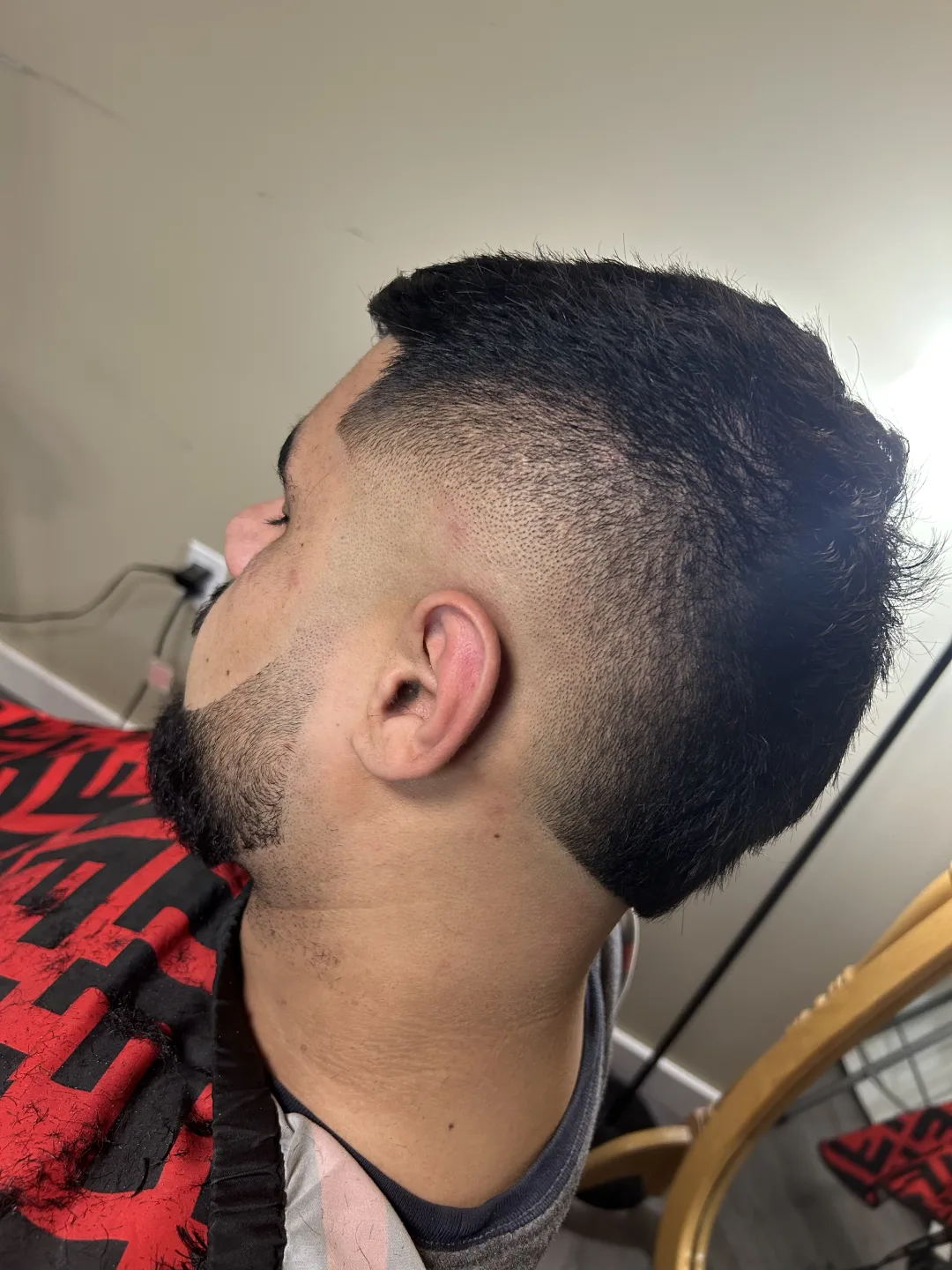
What Is Beard Sculpting, Exactly?
A trim takes length off. Sculpting decides where your beard should live on your face — and removes everything that doesn't belong. That one distinction changes the entire result.
Your barber maps a neckline that sits where it should: down where the head meets the neck, not riding up along your jaw. Cheek lines get set deliberately — high and natural, or lower and razor-crisp, depending on your growth pattern and the look you're after. Density gets balanced so the beard reads full instead of bushy. And the profile — how far the beard projects at the chin and jaw — gets shaped to work with your bone structure, not against it.
The result is a beard with intent. Every line is a decision. That's what people notice from across the room, and it's exactly what the beard sculpt is built for.
How Is Sculpting Different From a Basic Trim?
Think of it like this: a trim is maintenance, a sculpt is design. Both have their place. They just solve different problems.
- A trim shortens what's there. Same shape, less length. It's the right call when the structure is already dialled and you just need it tightened up.
- A sculpt builds the structure. The neckline gets relocated, cheek lines get redrawn, weight gets redistributed to where it flatters you. It's the move when your beard has never been properly shaped — or it's grown past the point where the old lines make sense.
Here's the honest test: if you've been trimming your own beard for months and it still doesn't look right, length isn't the problem. Shape is. No amount of careful at-home trimming fixes lines that were never set correctly in the first place. You can't maintain a design that doesn't exist yet.
What Happens in the Chair?
Every sculpt starts with a conversation, not clippers. What do you want the beard to say — sharp and architectural, or full and natural? Where does it fit your day-to-day? Then the work starts.
- Mapping. Neckline and cheek lines get located before anything gets cut. Measure twice, cut once applies to beards too.
- Bulk and shape. Clippers and shears take down volume and carve the profile, working with your growth pattern instead of fighting it.
- Edges. The lines get cleaned to a crisp finish. This is the step where a beard goes from tidy to sharp — and the step home trimmers butcher most.
- Finish. Direction brushed in, a touch of product, and a proper look in the mirror before you're out of the chair.
It's unhurried, precise work — one chair, one client, no queue breathing down your neck. That's the Studio K way of doing it.
Already sold? Skip ahead and book the chair →
Which Beard Shape Suits Your Face?
The right beard shape does the same job as the right haircut: it balances your proportions. A few honest starting points:
- Rounder faces want length at the chin and tighter sides. The beard adds the angles the face doesn't have on its own.
- Longer faces want the opposite — fuller through the cheeks, shorter at the chin. Adding length below only stretches you further.
- Square jaws can go either way. Keep it tight to show the jawline off, or add controlled length to soften it.
- Patchy growth isn't a dealbreaker. A shorter, well-lined beard beats a longer patchy one almost every time.
The same logic drives your haircut — we broke that down in the face shape guide. Get the cut and the beard working together and the whole look levels up at once.
How Long Does a Sculpted Beard Last?
Longer than you'd think — and that's the real payoff. When the lines are set correctly, the beard grows out inside its shape instead of losing it. A properly placed neckline still reads as a neckline three weeks later. A guessed one starts looking like neck scruff within days.
Most guys land somewhere between two and four weeks before the edges want attention again, depending on how fast the growth comes in and how crisp you like to keep it. Pair the beard work with your haircut and everything stays on one schedule — that's exactly what the cut and beard is for. One appointment, both halves dialled, walk out complete.
Ready to Go From Scruff to Sharp?
Studio K is a one-chair private studio in Guelph. No walk-in queue, no rushed finish, no one waiting on your seat — just your appointment, done properly, start to finish.
If the beard has been running the show lately, it takes exactly one sitting to flip that. Book the chair, bring the scruff, leave sharp.